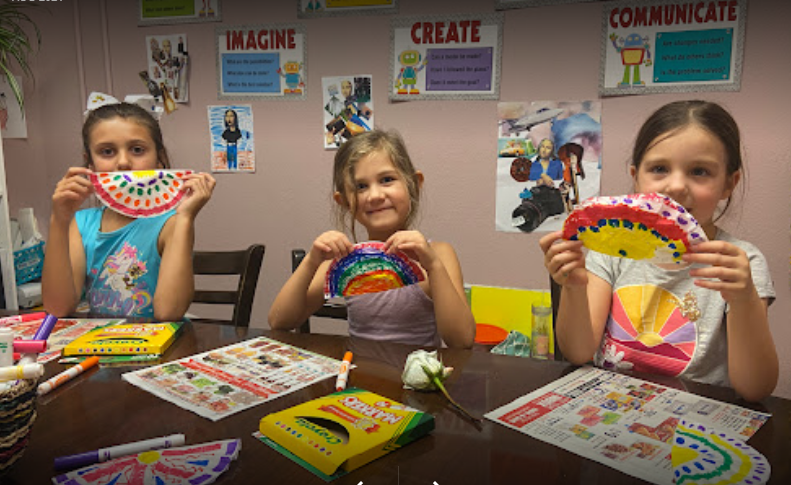
Bloom Academy in Las Vegas, Nevada, available to children ages 5 to 14 from all socioeconomic backgrounds, benefited from the resources and guidance provided by National Microschooling Center to fine-tune its self-directed learning approach. The academy’s philosophy is based on the idea that children are natural learners who should have unlimited opportunities to play, make mistakes, and develop their interests.
Editor's note: In keeping with our year-end tradition, the team at reimaginED reviewed our work over the past 12 months to find stories and commentaries that represent our best content of 2022. This post from newsfeature writer Tom Jackson is the seventh in our series.
 It’s well documented that millions of parents turned to microschools as a result of campus shutdowns during the long Covid-19 nightmare. These nimble learning centers provided safe gathering spaces and tailored learning experiences for cast-adrift students and comported with parents’ work demands.
More than two years later, what had at first seemed a temporary salve born of desperation looks more like a godsend to a long-festering problem. Writing for the Manhattan Institute, researcher Michael McShane lays out the framework and the appeal of microschools:
Neither homeschooling nor traditional schooling, [microschools] exist in a hard-to-classify space between formal and informal learning environments. They rose in popularity during the pandemic as families sought alternative educational options that could meet social-distancing recommendations.
But what they offer in terms of personalization, community building, schedules, calendars, and the delivery of instruction will have appeal long after Covid recedes.
Long-time education choice advocate Don Soifer concurs.
“For whatever reason, families are just rethinking the public education system,” he says. “The research is telling us now that microschooling serves 2-1/2 to 3-1/2 million learners as their primary form of education.”
That puts microschoolers at about 2% of the national student population, a number higher than K-12 Catholic school enrollees, according to the Center on Reinventing Public Education.
“It really wouldn’t surprise us at all to see microschools capture 10 percent of market share,” Soifer says.
In short, microschooling is no flash-in-the-pandemic phenomenon. In response and anticipation – and backed by Stand Together Trust – Soifer launched just last week the National Microschooling Center, a Las Vegas, Nev.-based resource hub designed to provide a smorgasbord of resources and technical assistance in support of the growing wave of tiny learning environments across America.
Soifer’s credentials for the task are as impeccable as his interest is diverse. Active in President George W. Bush’s No Child Left Behind initiative, he served on charter school boards in Washington, D.C., and Nevada, and has been president of Nevada Action for School Options since September 2017.
At the start of the pandemic, Soifer and his team partnered with the city of North Las Vegas to create the Southern Nevada Urban Micro Academy, which opened in August 2020. It’s not often the local media uniformly praise anything, Soifer noted, but with academic scores surging amid students, parents, educators, and lawmakers who found themselves uniformly delighted, SNUMA managed to harmonize even the typically rancorous media choir.
Notable, says National Microschooling Center chief innovation officer Ashley Campbell, is how quickly the students adapted, then thrived.
“It was so exciting to watch the transformation of the children as they … [had] the chance to own their own education, follow their own learning trajectory, set their own goals, and live up to those goals,” Campbell said.
“It was amazing to watch a group of fifth- and sixth-grade students shift from a place where learning wasn't cool, it wasn't cool to be smart, to a place where they were encouraging each other to meet their goals and exceed them.”
The year’s contagion wasn’t confined to Covid-19, it turns out.
“Movement-building is a gradual process, and frankly one that the school choice movement has had mixed success over time in doing,” Soifer says. “And even that success is different in particular jurisdictions. But as people have become familiar with this different way of learning — in ways that public schools don’t encourage — it gets to be popular. And that makes for concerted, dedicated, sustained movement-building.”
The prevailing menu of microschools comes in three forms: independent (standalone pods or centers), partnership (with a public, private, or sectarian entity), and corporate (such as KaiPod Learning or Prenda). National Microschooling Center is designed to increase the momentum for all of them in four key ways: by cultivating and growing demand; by building and strengthening microschool leader capacity; by driving growth-friendly policies; and by mobilizing united communities of practice.
“It’s really important to note that we’re not talking about taking a model that works here and placing it somewhere else,” Soifer says. “If you’re a microschool that wants support and resources, we’re not going to require you to follow a design. It’s about building a program to meet the needs of your particular learners, equipping your leaders for success, and making sure they know how to build relationships with families.”
In other words, he says, it’s not about the center saying, “Here’s the model and let’s stick to it.”
Prioritizing bespoke learning conditions is how Soifer’s group has acted at the local level, says Sarah Tavernetti, principal of Bloom Academy in Las Vegas.
“We don't do testing. Or grading,” she says. “What else? There’s no homework, we don't implement a curriculum, so we're fully self-directed.”
Rather than telling students what they’re going to learn about, Bloom Academy encourages them to let their curiosities and natural inclinations guide their day.
“We’re here to support them, bring in people from the community who are knowledgeable about the things that they're interested in,” Tavernetti adds.
Some students attend Bloom Academy full time, some part time, some as part of their homeschool program.
“We’re kind of this umbrella for all those different philosophies,” Tavernetti says.
And Team Soifer is perfectly okay with that.
“Don and Ashley started out as advisors,” Tavernetti says. “Now we think of them as friends.”
Plainly, then, what the National Microschooling Center won’t do is require schools to purchase particular curricula or licenses or get locked into a contract. Instead, the center offers resources and guidance, plus the opportunity for connectedness — mobilizing united communities of practice.
Education, in every form, often leaves practitioners with the sense that “they’re out on an island doing their own thing,” Campbell says. “Teachers spend their day in the classroom with the kids, and they rarely have a chance to talk to other adults.
“We’re making sure that our microschool leaders are not feeling isolated, that they’re able to come together, brainstorm with each other, and solve problems together.”
But the bigger picture is never far from Soifer’s mind. Topping the National Microschooling Center’s action plan is energizing and organizing a coast-to-coast school-choice advocacy movement. There’s already good news on that front, especially in Arizona, but also in Florida, Indiana, and West Virginia.
But even in less choice-friendly Georgia, microschools are thriving in and around Atlanta. It’s all about understanding the lay of the land, Soifer says, and working the topography to your best advantage.
“There’s energy here like we haven’t seen,” he says. “And [microschools] don’t compete with each other; they really want to see each other succeed and thrive.”
If that’s truly the case, National Microschooling Center has arrived on the scene at precisely the right moment.

Mountain View Christian Schools in Las Vegas, Nevada, is one of about 150 private schools in the state. An essential part of the school’s mission is to graduate Christian leaders who are being trained to make a substantial contribution to society by modeling and applying their Christian worldview.
Editor’s note: This first-person essay from Nevada mother Diana Reyes was adapted from the American Federation for Children’s Voices for Choice website.
Diana Reyes
I spent many nights crying myself to sleep in frustration at the lack of help my son was receiving at school. So many times, he would come to me with tears in his eyes, saying, “Mom, I am trying my best, but I don’t understand what they are teaching.”
No matter how many tutoring sessions he attended, no matter how many hours he worked, it was the same. His self-esteem dropped and he started isolating from other students.
I pledged that I would find a better path for him, and I did, at a wonderful private school in downtown Las Vegas. I was impressed to learn that Mountain View Christian Schools offer a fully integrated leadership philosophy rooted in the truth of God’s word. Students from preschool through high school are trained in problem solving, teamwork and communication skills.
The only problem was the cost. Once again, I hit a wall. Even if I managed to find a second job, I still wouldn’t be able to afford the tuition. It broke my heart that I couldn’t provide what my son needed – and what children with more affluent parents were enjoying.
Then I heard about a new program that was being approved in our state: the Nevada Opportunity Scholarship Program. Enacted by our state Legislature in 2015, the program mirrors successful tax credit programs in other states such as Florida and Arizona. The Nevada program provides scholarships of up to $8,469 for K-12 private school tuition and fees for families whose household incomes do not exceed 300% of the poverty level.
Put simply, a family of four making less than $83,250 can qualify for this scholarship.
There are five approved scholarship granting organizations in Nevada, which determine when scholarship applications can be submitted. The granting organizations review the applications to determine who will receive the scholarships, which are awarded on a first-come, first-served basis to those who qualify.
We were among the lucky ones.
The Opportunity Scholarship became the answer to my prayers and the end to my sleepless nights – and so much more than that. My son’s teacher at Mountain View got him caught up in six months. I noticed he was more confident and happier, building friendships.
He thrived on the school’s Bible-based curriculum, which aligns with state and national standards and is enhanced with yearly assessments. In addition to core classes, my son benefited from enrichment classes in technology, art, physical education, and music.
My son graduated from Mountain View with a commitment to apply Christian values, leadership training and academic excellence to the needs of the world, just like the website promised.
Today, he is attending the University of Las Vegas-Nevada, the first in our family to attend college. I don’t think this would have been possible if he had not had the opportunity to attend a school that matched his needs.
In fact, I would go so far as to say that this school and the Opportunity Scholarship that made attendance possible for my son changed the course of our family’s future.
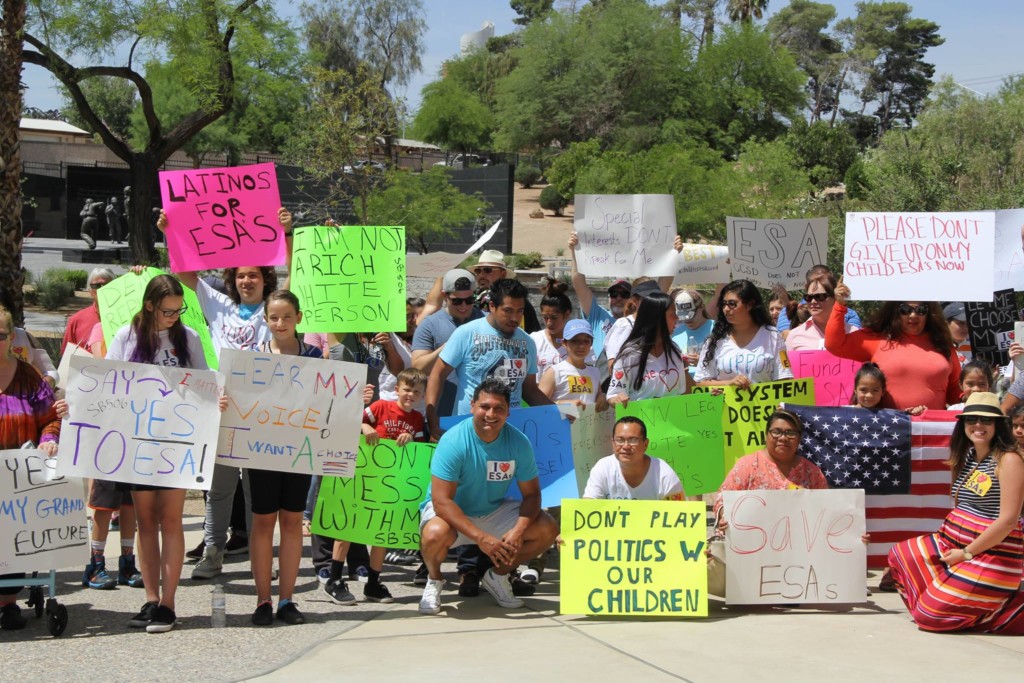
Nevada families rally in support of the state's Education Savings Program, which encountered legal challenges and was never funded.
Editor’s note: Florida lawmakers who have signed the American Federation for Children’s Education Freedom Pledge include Sen. Manny Diaz Jr., Sen. Joe Gruters, Rep. Anthony Sabatini, Rep. John Snyder and Rep. Alex Andrade.
You might be asking yourself why, in a state like Nevada that remains among the lowest ranked in the country when it comes to quality education year after year, legislators do not want to give parents access to different educational avenues.
Or to even dare to think about doing things differently.
In 2015, Nevada enacted its Education Savings Account Program. The intent was to offer students approximately $5,100 per year (plus an extra $600 for low-income or special-needs students) that could be used for a wide range of eligible educational expenses, such as private school tuition, tutoring, textbooks, online courses and homeschool curriculum.
The program immediately encountered two separate legal challenges and was never funded.
Then, at the end of the state’s legislative session in June 2019, the Nevada Legislature approved a bill to eliminate the voucher program that had been unable to operate since the state supreme court had declared it unconstitutional. It was the first time in U.S. history that an ESA program was repealed after being enacted.
Despite the thousands of parents who once applied to the program and the hundreds who showed up during rallies and testimonies to fight against the repeal, school choice in Nevada still remains a hotly debated issue today among legislators.
Most Republicans in Nevada continue to show support for school choice. This is evidenced by the recent display of the entire Republican Assembly Caucus signing the American Federation for Children’s Education Freedom Pledge, becoming the second state in the country to do so.
Unfortunately, there continues to be less support from Democrats for school choice, or perhaps I should say, there is support among Democrats, but they get threatened by the teacher’s union every time they dare to speak up in support of families.
Throughout the country, school choice has become a popular winning issue during the pandemic. Major media outlets called this the year of school choice. For the first time, parents became aware of the importance of having school options. Virtual instruction also brought education to families’ living rooms and forced parents and guardians to become cognizant of how their children were doing in school.
Yet, in Nevada, school options for parents have remained limited. The only private choice program, the Opportunity Scholarship, helps less than half of 1% of the entire population of students in Nevada. Parents also often complain about not making the long waiting list of charter schools.
The pandemic only made things worse for students in Nevada. As the Review Journal reported, just 10.2% of African American students tested proficient in English. In math, the number was a “jaw-dropping” 3.9%. For Hispanic students, the number, 15.7% were proficient.
But if the recent Virginia election is any reflection of what could happen nationwide, there could be hope for a state like Nevada, where the unions strongly oppose giving parents any sort of choice; voters could decide to elect legislators that support school choice – especially now that they have a place where they can become informed about who supports them with the Education Freedom Pledge.
If parents are victorious in the next round of elections, incoming legislators could finally enact a program that will help a larger percentage of students. Despite the programs chosen – education savings accounts, tax credit scholarships or public choice – students in Nevada finally will be able to enjoy the opportunities they need to succeed.
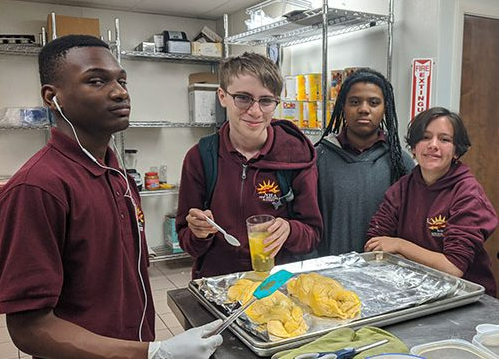
: New Horizons Academy in Las Vegas offers special needs students many opportunities for project-based learning, encouraging them to work in small groups to independently create projects they display during special assemblies.
Editor’s note: This commentary from Don Soifer, president of Nevada Action for School Options, is an exclusive to reimaginED.
Families of special-needs learners across Nevada recently received notification that they have received grant awards under what may be the Silver State’s most family-friendly education program to date.
The Transforming Opportunities for Toddlers and Students (TOTS) program provides special needs learners under the age of 18, who “faced disparate impacts from the COVID-19 pandemic and its associated economic impacts,” with $5,000 grants, which must be used for educational purposes, broadly defined.
Hiring tutors (including in microschools, learning pods and services available through diverse education providers), assistive technology, purchasing educational services from a private school, or even transportation for schooling all fall within the allowable uses for grant funds.
The program is administered by the Nevada State Treasurer, and grants will be distributed through the ABLE savings account program, via its virtual wallet mechanism. This distribution vehicle is an important component of the TOTS program, ensuring that these grants do not compromise participating families’ eligibility for other programs, and presents a useful model for other state school choice-eligible funds for special needs learners.
The TOTS program came into being in the closing days of the 2021 legislative session and was a priority for longtime school choice champion Sen. Scott Hammond in negotiations to finalize a budget package that included new taxes on the mining industry.
Noted Hammond: “The pandemic made it difficult for all families to keep their children’s learning on track, and especially for families with disabilities.”
Hammond observed that it was crucial that all special needs learners, including those who homeschool or attend nonpublic school, share eligibility for the TOTS grants. As Nevada’s original advocate for universal education savings accounts, he has been an outspoken proponent of allowing families maximum flexibility in making educational choices that best meet the needs of their learners.
Nevada Treasurer Zach Conine noted that the $5 million in funding initially allocated by the Legislature for TOTS will be in high demand, and more than 1,000 applications were received within 24 hours after the application period opened.
Nevada is home to more than 40,000 learners with special needs, according to recent estimates. Both Conine and Hammond, the program’s two architects, have called for leaders to join them in seeking to secure additional funding for the high-demand program in the future.
Observed one parent whose child received a coveted TOTS grant, “Nevada families of special-needs children often struggle to receive necessary programs and services from their public schools. The TOTS program comes as a welcome acknowledgement that parents should be able to choose which programs and services are the best match for their child’s needs.”
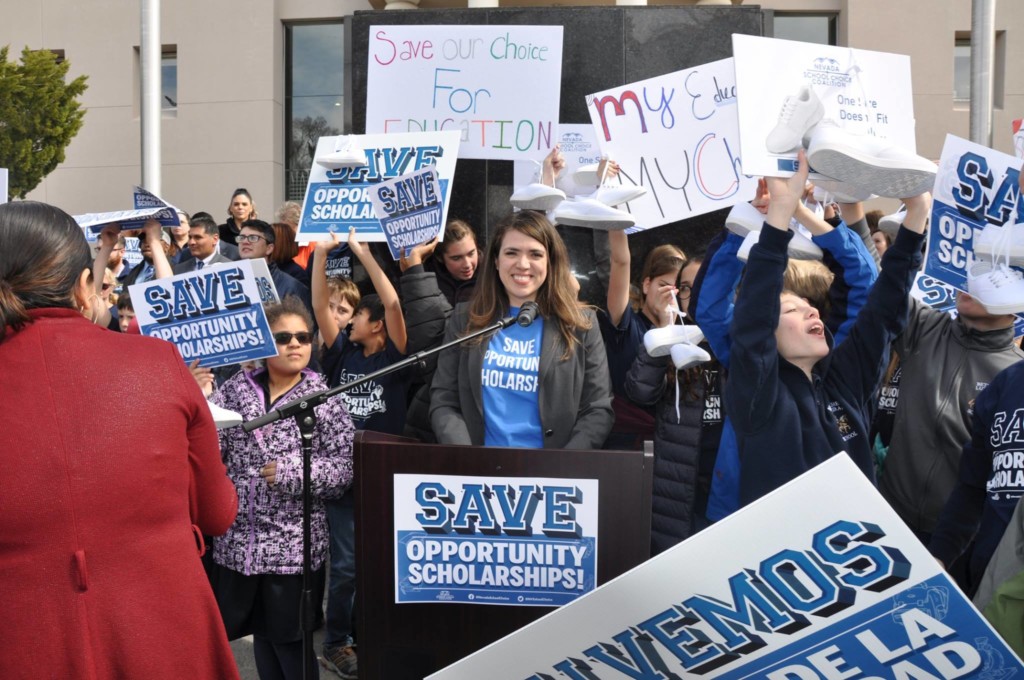
Valeria Gurr speaks to a crowd of education choice advocates at a 2019 rally in Nevada at a time when lawmakers had cut funding to the Opportunity Scholarship program and closed it to new students.
Before Valeria Gurr arrived in the United States to attend graduate school, the native Chilean had no idea a school choice movement existed. What she did know was that she hated school as a child growing up in a tiny town in southern part of the country.
The daughter of a single mom who didn’t finish high school, Gurr said she was “passed from grade to grade,” enduring bullying along the way and fearing she was destined for a future like her mother’s.
Her mother tried to put her in private school but couldn’t afford it. Gurr’s self-esteem hit rock bottom, and she grew up blaming herself for “not being smart.” Despite those challenges, she refused to give up. She studied diligently and hoped it would lead to a better life someday.
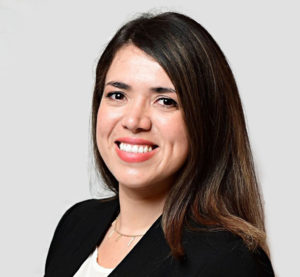
Valeria Gurr
“The public schools (in my hometown) are horrific,” recalled Gurr, who recently became director of external relations for the American Federation for Children, a national nonprofit organization that supports education choice. “The people who have money can send their kids to private schools. Charters are hard to get in. When I graduated, I had to spend a year preparing for my SATs, and I realized that I wasn’t learning math like I wanted to or grammar like I wanted to.”
After graduating from Duoc UC of Pontifical Catholic University of Chile with a degree in public relations and marketing, the then-24-year-old moved to the United States to attend graduate school at the University of Nevada Las Vegas, where she wrote her thesis on the role the newspaper, El Mercurio, played during the Chilean coup of 1973 and the transition to democracy. That analysis piqued her interest in policy and public affairs.
Her first job out of school: digital and social media specialist for the Clark County Education Association, a local affiliate of the Nevada State Education Association, which her current organization is often at odds with over education choice issues.
“I had no idea what a teachers’ union was,” she recalled. “It was an opportunity for me to learn and have professional experience in the United States. I needed a job and needed to do something immediately.”
Gurr, who came in “really excited about helping the state of Nevada” left less than two years later.
“I was burned out. We did a lot of things fighting for taxes or more money, but in the end, it never translated,” she said. “It never really fixed anything.”
She went on to become program coordinator and later manager at Nevada Institute for Children’s Research and Policy, where she was responsible for training parents and the community in preventing child maltreatment. She liked that she was able to focus on the welfare of children, something that was not the primary emphasis at the teachers’ union.
When she visited the district schools and saw them so packed that kids were being rushed through breakfast and sent to classes with as many as 50 students, she experienced an awakening.
“I realized then that I lived in a bubble,” she said.
About that time, a friend who worked the American Federation for Children asked her to volunteer at a rally for education savings accounts.
“I had no idea what an ESA was,” Gurr said. “She had to explain it to me.”
The bill passed, but its funding methods were challenged in court. By the time the way was cleared to craft a new bill, Democrats had gained control in both legislative chambers.
(To learn more about the ESA initiative in Nevada, listen to a podcast with Nevada state Sen. Heidi Gansert.
Gurr’s job that day was to basically help with the camera. But the experience inspired her.
“I started seeing parents who were really angry. There were hundreds of them,” she said. “I thought, ‘Why is this? What’s going on?’ I realized then that the media didn’t represent the voices of these families.”
Gurr continued to volunteer, and when her friend moved to Florida in 2017, the American Federation for Children tapped her to be its state director in Nevada. Gurr became a fierce advocate for education choice in the Silver State, organizing parents and writing opinion pieces in the state’s news outlets in which she held nothing back.
“As the state director for the Nevada School Choice Coalition, I have grown extraordinarily frustrated with the public school system as it continues to fail the communities that need it the most,” she wrote in a piece for the The Nevada Independent as the 2021 legislation session began. “I want lawmakers to know that the pandemic has opened parents’ eyes, and now, more than ever, they want school choice. Last session, lawmakers played games with 2,300 families. As a result, hundreds lost their scholarships.”
The reference was to 2019, when lawmakers made cuts to the state’s Opportunity Scholarship Program by diverting scholarship tax credits to the state budget, which translated into hundreds of families losing their scholarships. They also closed the program to new students.
In the 2021 session — Nevada sessions are biennial — lawmakers passed a mining tax in which Republicans were able to carve out money for the scholarship program, expanding it to $22.8 million. An alliance with charter school organizations also resulted in the inclusion of $3.8 million to hold a dozen charter schools harmless from funding drops, along with a one-time federal allocation of $15 million for Title 1 charter schools.
“I feel it in my bones when people tell me about school choice,” said Gurr, who has a 4-year-old son. “People say they want their son or daughter to feel safe, to get one-on-one attention. They want their kids to be happy.”
She said parents tell her that their states “keep talking about getting it done but never get it done.”
Now she will fight for them, too. Just like she did for Nevada.
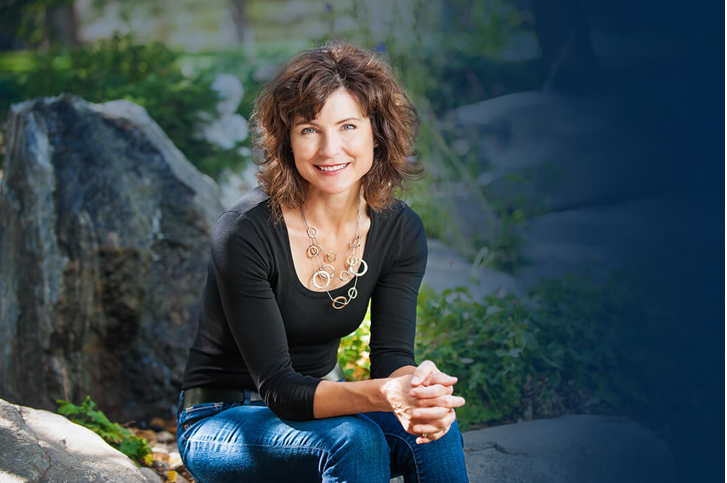
 On this episode, Tuthill talks to the senator from Nevada’s 15th District about the education choice landscape in the Silver State.
Efforts to fund an education savings account program in Nevada, which were derailed by a legal challenge after the program was created in 2015, were unsuccessful in 2017 after Republicans lost a majority in both houses in 2016. But the state's one private school choice program, a tax credit scholarship, was expanded during the recent legislative session to serve up to 2,500 students.
Tuthill and Gansert discuss the scholarship's path as well as the state’s rapidly growing charter school networks.
"If you're trying to break the cycle of generational poverty, education is the key … You've got to keep fighting for students and consider what's in the best interest of students, not interest groups. (Education choice) makes a lot of sense."
EPISODE DETAILS:
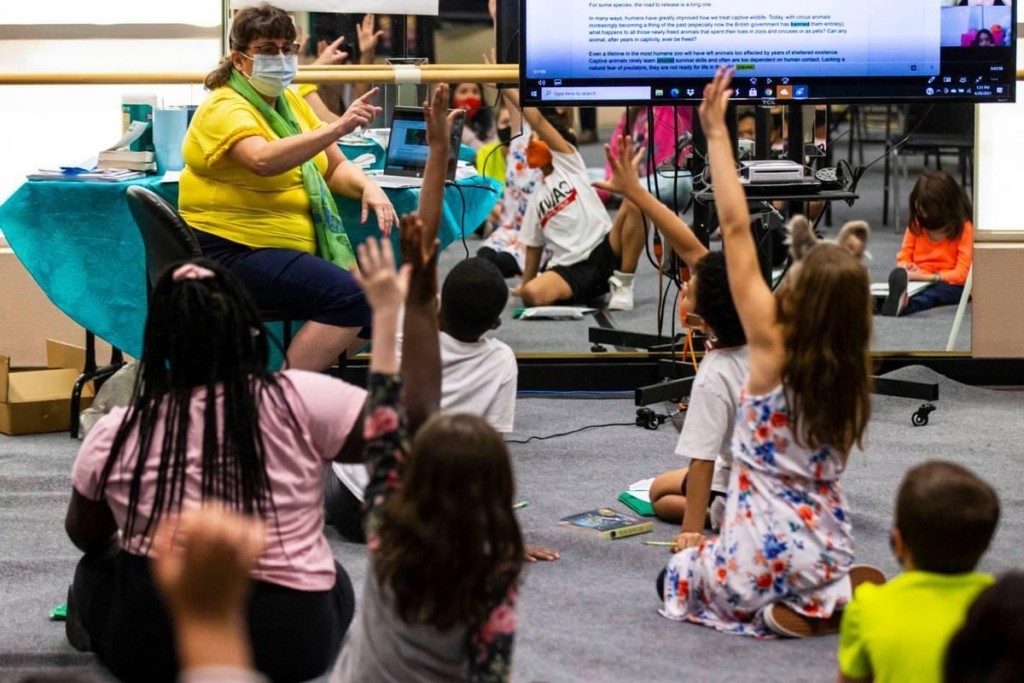
Every child at Southern Nevada Urban Micro Academy made at least one full year’s academic growth in reading/English language arts in 2020-21 despite the fact that three out of four arrived at the start of the year at least two grade levels behind.
Editor’s note: This commentary is from Don Soifer, president of Nevada Action for School Options and a founding leader of the Southern Nevada Urban Micro Academy. To learn more about the academy, watch this short documentary video.
Ten miles north of the bright lights of the Las Vegas strip, one of the nation’s more powerful beacons for the future of schooling completed its first academic year in comparably stunning fashion.
The Southern Nevada Urban Micro Academy (SNUMA), the first-of-its-kind public private partnership micro-school designed to tackle pandemic learning loss, has operated in person every school day. Clark County public schools, meanwhile, operated a distance-learning program that few felt was working close to optimally.
While the most recent school year surely will prove unforgettable for any number of reasons related to hardship, challenge, and tragic loss, the experience of the nearly 100 SNUMA learners and their families were overwhelmingly positive, and in sharp contrast with most of their prior schooling experience.
North Las Vegas is one of Nevada’s poorest and fastest-growing cities. Residents and the public officials who serve them have complained for decades about being underserved by their massive school district, the fifth largest in the nation. Three out of four children who attended SNUMA last year arrived at the start of the year and six months into the pandemic at least two grade levels behind in their mastery of English language arts and math.
So, it was even more valuable when 100% of SNUMA students made at least one full year’s academic growth during the year in reading/English language arts, and 87% posted at least two years’ growth.
The results in math were comparable, if slightly muted; 92% finished the year having accomplished at least one school year’s academic growth in math, and 35% completed at least two years of academic growth.
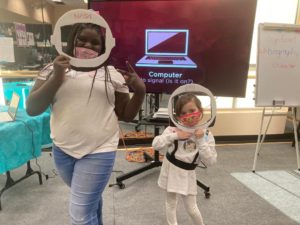 The most striking results came from the program’s third and fourth grades. Every one of them who attended for the full year accomplished at least two years of academic growth in English language arts. In math, all accomplished at least one full year’s academic math growth, and 75% completed at least two years of math growth.
The Micro Academy doubled the size of its student population prior to the spring semester, and its midyear cohort of children followed a comparable trajectory of learning growth. All children arriving midyear achieved a full year’s growth in English, and more than half did so in math.
SNUMA’s highly structured daily schedules emphasized academics using a personalized learning model that combined strengths of world-class digital learning tools with those of a rich, in-person learning experience that embraced whole-group, small-group and one-on-one instruction from a team of “learning guides” and interventionists.
The nonprofit in charge of the school’s academics worked with an all-star team of partners to deliver its high-quality product, including grades 3-8 curriculum provider Cadence Learning, whose unique model provided professional development and support described by the micro-school's educators as some of the best they had ever received.
The City of North Las Vegas funded the micro-schools entirely out of municipal funds, not per-pupil school funding, for its residents and for children of emergency workers serving the city. Children attended at a small cost, $2 per day, for the first semester, and entirely for free for the second semester. To attend SNUMA, all children were registered as homeschoolers.
The city contracted with nonprofit Nevada Action for School Options to provide the teaching and learning for SNUMA. The model truly is an active partnership, located in the city’s two recreation centers and a library, with free breakfast and lunch provided for all children. Small class sizes characterize SNUMA’s learning environment, and the 15-child classroom limit proved not only valuable for both pandemic safety and education reasons, but quite popular with families who had been accustomed to a school district known for large and even overcrowded classrooms.
The forward-focused city leadership, at the time all elected Democrats, wanted to serve its children well while working to get parents back to work. Offering a desirable alternative to “leaving their child home alone with a jar of peanut butter” was an early motivation.
Councilwoman Pamela Goynes-Brown, a retired educator and one of the program’s primary champions, described SNUMA as “micro-schooling to make the powerless powerful.” She worked with the micro-school’s leadership team to create a model with equitable and measurable impacts.

Arizona: A former school teacher criticizes the state superintendent of public instruction for his support of Common Core and school choice (East Valley Tribune). The Sierra Vista Herald editorial board says the state superintendent's support of ESAs hurts public schools. Applications for Empowerment Scholarship Accounts doubles (Heartlander). The Arizona Republic editorial board opposes allowing public funding to go to private schools, especially now that the state support for ESAs exceeds the state support for public schools (note: the editorial board's calculation excludes local support for public schools). A consultant at a scholarship organization is indicted for stealing $529,000 in scholarship money (Arizona Republic).
California: Vanila Singh, a professor and physician at Stanford University and congressional candidate, says school choice is the key to student success (Mercury News). The California Charter Schools Association has sued the West Contra Costa School District for withholding tax revenue intended to fund charter schools (Contra Costa Times). Charter schools struggle with online assessments (FSRN Radio).
D.C.: Two charter schools allegedly under federal investigation for possible discrimination say they have never received a complaint from a student or parent (Washington Post). President Obama sends his daughters to Sidwell Friends, an elite private school that refuses to release information on student course completion and graduation rates (Washington Post).
Florida: The tax-credit scholarship expansion will allow the program to serve higher-income families (Education Week, Tampa Tribune, WJHG TV). More low-income families will benefit from the tax-credit scholarship program if the Governor signs the bill into law (Florida Times-Union). The state passes the nation's second education savings account program (Foundation for Excellence in Education). Daphne Cambell (D-Miami-Dade) says she voted to expand the program because giving poor kids more options is the right thing to do (Miami Herald). The Tampa Tribune editorial board says the scholarship expansion is justified because every student deserves to find a school that works well for them. Brian Tilson, owner of a communications firm in Boca Raton, says the scholarships are unpopular and are hurting public schools (Gainesville Sun). Ron Matus, the editor of redefinED, says more progressive Democrats support parental choice (Gainesville Sun). The scholarship program helps families afford Jewish day schools (Chabad News). State Impact talks with Sen. John Legg about the legislative session including the passage of the scholarship bill. Marc Yacht, a retired physician, say charter schools should be more regulated and held to the same standards and rules as traditional public schools (Sun Sentinel).
Georgia: The Southern Education Foundation helps file a suit to overturn the state's tax-credit scholarship program (Watchdog). A former reporter sends her daughter to a charter school and says each school is so different it is difficult to compare them to each other let alone public schools, and that is a good thing (Atlanta Journal Constitution). (more…)
Alabama: Applications for the state's new tax credit scholarship program are now open (Alabama Opportunity Scholarship Fund, WTVY)
Arizona: Three charter schools will be shut down for poor performance (Arizona Business Journal).
California: The L.A. metro area has the largest number of students attending charter schools in the nation (LA School Report). Charter school growth booms in L.A. and San Diego (San Diego Union Tribune).
Georgia: NPR asks "what is school choice?" (WABE). Hall County ranks No. 1 in the nation for charter school enrollment growth (Access North Georgia). Charter school enrollment grows in the state as more schools request permission to convert to charters (Atlanta Journal Constitution).
Florida: If Catholic schools were a district, they'd be the 9th largest in the state (redefinED). 80,000 students attend charter schools in Miami-Dade, making it the 6th largest (numerically) metro charter area in the nation (Miami Herald). A virtual charter school is approved to set up shop in Pinellas County (Tampa Bay Tribune). Across the bay in Hillsborough, a school board votes down a charter school request by MacDill Air Force Base (redefinED). The number of students using "opportunity scholarships" to leave poor-performing schools doubles in Duval County (Florida Times Union). Florida Virtual School offers students flexibility (Townhall.com).
Indiana: Gov. Mike Pence wants vouchers for pre-k students (Indianapolis Star, Greenfield Reporter). Pence thinks charter school networks should be allowed to operate more like school districts (Courier-Journal). Public school districts will have to hold lotteries for public school choice if demand exceeds supply (Education Week). Gary ranks 5th in the nation for charter school enrollment (Post Tribune).
Louisiana: The Louisiana Association of Business and Industry is the most influential organization on education reform, according to a Brookings Institute study (Times Picayune). New Orleans has the largest percentage of students attending charter schools of any city in the nation...for 8 years in a row (Times Picayune). (more…)
Tennessee: Gov. Bill Haslam proposes a voucher that's limited to low-income students in low-performing schools, with additional state funding for those schools to boot (KnoxNews). More from timesfreepress.com and Nashville Public Radio. Haslam reiterates that his proposal won't affect funding for public schools (Nooga.com). Both supporters and opponents find details to criticize (KnoxNews). Haslam's administration is also backing a bill that would cap enrollment at a virtual charter school run by K12 Inc, reports timesfreepress.com.
Florida: At a National School Choice Week event, new Florida Education Commissioner Tony Bennett gives some school districts credit for expanding public options such as magnet schools and career academies (redefinED).
Louisiana: The teachers union in New Orleans asks for the names of teachers in the city's charter schools in the hopes of organizing them (The Lens).
Arkansas: Former Florida Gov. Jeb Bush makes an appearance during National School Choice Week, urging lawmakers to expand charter schools and other choice options and calling education reform both the civil rights and economic issue of our time (Associated Press). More from the Arkansas Press-Gazette.
Virginia: Democratic lawmakers kill a charter school bill and snub their party's national platform in the process (Watchdog.org). More from the Associated Press. A bill to allow home-schoolers to play sports in public schools - a so-called "Tebow" bill - passes the House but must still clear the Senate (Associated Press).
Georgia: The state charter schools commission holds its first meeting since being revived by passage of a constitutional amendment (Atlanta Journal Constitution). More than 1,000 charter school supporters gather to celebrate the amendment's passage (Atlanta Journal Constitution).
South Carolina: State Superintendent of Education Mick Zais says at a National School Choice Week event that he supports a legislative proposal for tax credit scholarships (SCNow.com).
North Carolina: An expansion of charter schools brings debate about quality (Durham Herald Sun).
Mississippi: A bill backed by Gov. Phil Bryant to create a tax credit scholarship program clears the Senate education committee (Associated Press).
Texas: A charter school chief executive testifies in a trial about education funding that low state spending is hurting charters too (San Antonio Express News). The Amarillo school district joins others in supporting an anti-voucher resolution (NewsChannel 10). Gov. Rick Perry backs expansion of charter schools and a proposal for tax credit scholarships (Dallas Morning News). (more…)

