Education freedom has been on a generational run. In the past few years, multiple public school choice programs, such as open enrollment, have been passed, and according to EdChoice, over a million students are now participating in private school choice programs.
Yet, as the education system changes, transportation access barriers could limit the rapid expansion of educational opportunities. If education freedom is to meet its full potential, education choice proponents cannot neglect the issue of transportation access. Instead, policymakers and reformers should increase transportation options to meet families' needs.
While most students live geographically close to their assigned traditional school, students exercising education choice are often subject to longer commutes to attend the schools that best serve them. These longer travel times can have severe ramifications for students, as research suggests that a student's access to school transportation factors into student attendance and performance.
The problem isn't limited to a few families, either.
A 2018 report looking at Florida’s private tax-credit scholarship found that 30% of parents listed transportation as a reason they had difficulty using the program to find a school. However, polling suggests that two-thirds of parents will transport their child to a higher-performing school if given a chance. A survey last month by the transportation service HopSkipDrive showed that 70% of families surveyed said they were managing transportation on their own. Also, 30% of parents called coordinating transportation one of the most stressful parts of the back-to-school season.
In a series of reports from the Urban Institute, various cities, including Denver, Detroit, New York City, and Washington, D.C., were used as case studies to gain insight into the effects of transportation on school choice decisions. Each city offered various public education options for families outside a family's residentially assigned school. Predictably, many families decided to use such options, choosing schools with lower absenteeism rates, higher graduation rates, and higher student achievement. These benefits increased when students attending their chosen schools were offered transportation.
Still, transportation options are often unavailable. Many states have no clear laws regarding who is responsible for providing student transportation. As a report from Bellwether put it, this system, which often offers no transportation support, is "inherently inequitable as low-income, Black, and Hispanic families are less likely to have access to an automobile and less likely to have the scheduling flexibility to accommodate a lengthy school commute."
For example, 20% of low-income families do not own a vehicle, according to a 2021 report from the U.S. Department of Transportation. Of the families that do, vehicle availability remains an obstacle. Furthermore, school transportation costs have nearly doubled in the past few decades, explaining why transportation funding remains a commonly cited barrier for students receiving a high-quality education.
States like Arizona, which has universal education choice, have taken this issue head-on. After passing the first universal ESA bill, Arizona created the statewide Arizona Transportation Modernization Grant Program, using $20 million to modernize K-12 transportation options and increase student access to transportation. Grantees experimented with various options, such as partnering with a ridesharing company and experimenting with micro-transit service.
Early reports show the partnership increased support for homeless students, increased the number of students who take advantage of extracurricular activities, and provided a helpful stopgap for schools facing a bus driver shortage. Moreover, many of the solutions are still being scaled and implemented in districts, schools, and communities across the state to meet the needs of Arizona’s ever changing K-12 system.
Other states, like Wisconsin, have also tried allowing families to direct transportation dollars, which can help them find transportation solutions that best meet their needs. For instance, families in Wisconsin have this luxury, as the state will reimburse them up to about $1,200 a year for families of certain income status who use intradistrict choice.
Nevertheless, more innovative approaches are needed to increase access to new learning opportunities for the students and families needing them most. If education freedom proponents fail to embrace transportation reform, we will also fail students who deserve to be free from the constraints of an outdated education system based solely on their ZIP codes. We can't let this happen. No barrier, especially no transportation barrier, should deter students from reaching their full potential.
A new Florida law that expanded education choice eligibility also allows public school districts more flexibility in transportation.
Each weekday morning feels like a new nightmare.
The Echo Dot alarm goes off at 4:55 a.m. so my husband can make sure our son wakes up in time to make it on time to high school.
Morning bell: 7:06 a.m.
We flip on the overhead bedroom light and start the wakeup warnings.
It’s a process. The lump under the covers doesn’t budge as the warnings take on a more threatening tone. The bus departs at 5:59 a.m.
Our bleary-eyed teenager gets up at the last possible minute, skips breakfast and grabs an energy bar as he gets in the car for the mad dash to the bus hub.
The stakes are high.
If he misses that bus, it leaves mom or dad on the hook to drive him to school, which is outside our attendance zone. It’s an hour round trip for us if we are lucky enough to arrive before peak car line time.
On days when the bus runs late, mom or dad are still on the hook. Education is a huge deal in our family and missing even a few minutes of first period is unacceptable. We count ourselves fortunate with our flexible remote work schedules to be able to make that sacrifice, as inconvenient as it is.
We know that financial situations and job schedules leave some parents with no other options, putting their kids at risk of falling behind because they miss valuable instruction time.
It’s unfair, but solutions have been elusive.
Getting to school on time wasn’t always such an ordeal.
Until 2021, all Pasco County high schools started at 7:30 a.m. Sleep research shows that’s still too early for teens. Their circadian rhythms keep their eyelids from feeling heavy until about 11 p.m. Students in rigorous specialty programs such as Cambridge, dual enrollment or International Baccalaureate, which my son is in, get hit hardest due to homework loads that keep them studying until the wee hours.
Last year, plagued by a severe shortage of bus drivers, our school board approved new start times at all the schools so fewer drivers could cover more routes.
Though the situation smoldered for years nationally before COVID-19 became part of our collective consciousness, the pandemic caused a surge in demand for commercial drivers and turned It into a five-alarm fire.
Our son’s school got placed into the first of a new four-tier bus route system. Some other schools, mostly elementary, got their start times pushed to 10:10 a.m. The changes wreaked havoc with work schedules, bedtimes and wakeup times for all families, disrupting even those who didn’t depend on the bus.

Dylan Wood, left, and his father, Mark Wood, get up at 5 a.m. to make it to the bus stop before 6 a.m. Photo by Lisa Buie
Officials told upset parents that they disliked the changes, too, but saw no other way but to make do with fewer drivers as they struggled to attract people willing to transport sometimes unruly students and work a split shift for $15 an hour.
No one mentioned that the shortages were symptoms of a broken, antiquated business model that was created before World War II. I heard no calls for a need to scrap the old system and build a 21st century system capable of serving students in the era of school choice and customized education. That’s likely because yellow school buses, driven by licensed commercial drivers, are the only option available to districts under Florida law.
Neither did I hear anyone discuss looking at other states, particularly Arizona, which has a reputation for innovation.
“Public school transportation is expensive, bureaucratic, and cumbersome,” wrote Emily Anne Gullickson, founder and CEO of A for Arizona, a nonprofit organization that seeks to solve education issues with best practices from the business community. “Needless to say, changes to our K-12 public transportation system are long overdue. But rather than put a Band-Aid on a failing system, Arizona chose to move forward in the 2021 legislative session with meaningful change prioritizing equity and opportunity.”
The result was the Arizona Transportation Modernization Grant Program, authorized by the state and administered by A for Arizona’s Expansion & Innovation Fund. The program gives schools, local governments and organizations the opportunity to reimagine public school transportation.
The first year, $20 million of state and federal funds were granted as seed funding to the best proposals that meaningfully improved access to safe and reliable transportation for districts offering open enrollment or public charter schools as well as submissions that supported efficiency and broader K-12 innovation.
Funded projects included Black Mothers Forum’s carpooling app, a partnership between local school districts and its Boys & Girls Clubs to use the nonprofit’s mini-buses, while another partnered with third-party provider HopSkipDrive to scale ridesharing for students who needed customized solutions.
This year, an additional $14 million in grant funding has been approved.
Florida approved landmark legislation this year to establish universal eligibility for education choice scholarships. Not surprisingly, that part of the bill grabbed the media spotlight. What didn’t get covered was the part of the bill that mandates relief to public school districts of “the most onerous regulations.” In selling the bill, lawmakers said it would help ensure a fair playing field in the competition for students’ education dollars.
Among the list of provisions: the ability for districts to use alternative means to get students safely to school. That doesn’t mean the big yellow buses will go away, state Sen. Corey Simon said during committee meetings. However, it would relax the mandate that the yellow bus system is the only allowable method, allowing districts to find solutions that make the most sense for each situation.
The bill drew praise from former state Sen. Bill Montford, a former public school superintendent who is now CEO of the Florida Association of District School Superintendents.
“We want our schools to be the first choice for parents, not the default choice, and to do that we need to reduce some of the outdated, unnecessary, and quite frankly, burdensome regulations that public schools have to abide by,” he said.
That flexibility will be critical as school districts prepare to comply with another new law, HB 733, which requires later start times for all middle and high schools by 2026, because it’s clear that more advertising and job fairs offer no permanent fixes.
None of this will happen in time to help my son and other members of the Class of 2024, but I take comfort in the fact that 8 a.m. is the earliest start time for most college classes.
After years of setting alarm clocks for 5 a.m., it’ll feel like sleeping in.
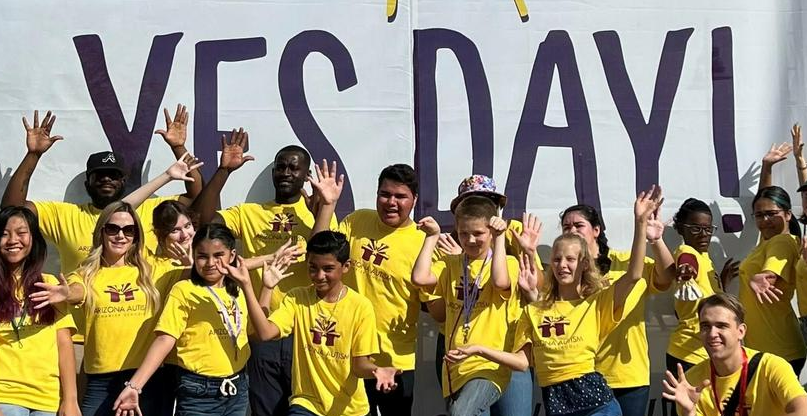
Arizona Autism Charter Schools in Phoenix received a $2 million grant from A is for Arizona to improve student attendance and student retention, increase the number of families who have access to the program, and reduce transit burdens on families.
Parents increasingly are looking for more options for their child’s education beyond their local district school, a trend spurred by flagging test scores and politically divisive curricula. As a result, many are pulling their kids out of the traditional school system. Yet despite this enthusiasm for greater choice, logistical difficulties are preventing parents from improving their child’s education.
Parents, public policy scholars, and politicians in favor of school choice frequently have focused on legal regulations, resulting in much positive change. But even as districts have loosened restrictions, many parents still are practically unable to send their children to the school of their choice because they lack quality public transportation.
A new report from A for Arizona shows that lack of transportation is one of the driving factors keeping parents tethered to the local district. The “yellow school bus” system is strikingly outdated, serving fewer households than ever. Nevertheless, the school transportation system is massive, larger than any other mass transit system in the country.
Parents who lack the resources to drive their children to school must rely on this old-fashioned system, which poses an obvious problem: Local school buses travel only to the nearby school, effectively locking low-income parents into the local public school. This has significant ramifications for school choice.
Activists either can choose to focus on creating even more schools, or they can work to modernize transportation and extend the range of accessible options for parents.
School choice activists, who convincingly have advocated for the right to establish a greater diversity of schools, must not overlook school accessibility. One easy way local government can make schools more available to children of all socioeconomic backgrounds is to get out of the way.
Regulations on school vehicles, like whether charters must use a yellow school bus to drive kids to school, are stifling innovations; eliminating these rules would be uncontroversial and productive.
There is a role for local governments to play in the solution. Modernizing the logistical system would help parents and lead to more educational equity. Luckily, recent government initiatives show how state and local governments can give communities the practical resources to improve educational outcomes. One such example is Denver’s new “shuttle system”, which has attracted praise.
Arizona has also taken positive steps in this regard. Gov. Doug Ducey approved a $20 million grant program as a pilot to incentivize district and charter schools to propose solutions to the transportation challenge. Grant awardees for Arizona Transportation Modernization Grants recently were announced, and the proposals offer exciting and feasible solutions to local issues.
One grant was given to an Arizona rural district that gained many students through open enrollment. Their local public-school transportation “system” consisted of only one dilapidated bus, which made accommodating the influx of additional children difficult. The grant will support a school bus with Wi-Fi and other technological amenities so that these rural school children have internet access while completing the long rural bus route.
Other charter schools and local districts are using funds to authorize school vans, rather than buses, to increase the number of vehicles that can pick up kids.
These targeted policies that increase access to nearby schools are not trivial but genuine advancements for schoolchildren. The “micro-transit solution” proposed in Arizona could help many urban communities, and the idea is easily portable to districts across the country.
It is said that states are laboratories of democracy. This is a noble calling, and local governments should be willing to take chances to holistically improve their school systems.
School choice helps those financially and socially disadvantaged receive a high-quality education. Unfortunately, the poorest in society are the ones most affected by the government’s inability to provide adequate school buses. As parent Alysia Garcia told lawmakers:
“What is the point of having a great open enrollment policy if families aren’t able to utilize it? I’m fortunate to have a vehicle to transport my kids. What about the kids who don’t have vehicles?”
Transportation is not a glamorous issue. However, it is deeply important for the day-to-day lives of families. School transportation is a burden that will only worsen unless districts take active measures to change course. Longstanding problems have been left unaddressed, and many issues have been exacerbated by the recent bus driver shortage.
Local governments should work with school choice supporters to get serious about improving the transportation infrastructure around schooling. Focusing on improving access to reliable infrastructure will prevent students from being trapped in their local district school.
The desire for school choice has never been greater. Transportation limitations should not be the reason why a child’s education stalls.
 On this episode, Ladner and Tuthill discuss Ladner’s recently published white paper for the Arizona Charter School Association on issues facing the traditional “yellow school bus” public education transportation system in Arizona and nationwide.
Ladner observes that traditional ridership already was in decline, but the COVID-19 pandemic created a huge demand for drivers with commercial driver’s licenses as the demand for delivered services exploded, making the situation worse. As school districts face an increasing driver shortage, Ladner and Tuthill discuss creative solutions such as aligning municipal bus services to serve student populations, creating financial incentives for carpooling, ride sharing, and more.
“If you're a family without a car or if your schedule doesn't align ... other options are going to be tantalizingly out of your reach … This leaves us in a situation where we need to figure out every way possible to get kids to school that does not involve CDL license-holders. This will be a big spur for transportation innovation."
EPISODE DETAILS:
The precipitous decline of the “yellow school bus” transportation system
How the COVID-19 pandemic led to a demand surge for commercial drivers
How the lack of school transportation access and options has created equity issues for families
How “flooding the zone” with school options such as charters and microschools can create greater transportation opportunities
LINKS MENTIONED:

