It seems the key players agree this should be the year Florida finds a way to fund charter schools facilities fairly.
But there are big questions about how, exactly, state lawmakers will make that happen.
A key state senator unveiled a proposal that would allow school districts to boost property taxes, and steer a portion of that money to charter schools.
The catch: That approach was contained in two bills. Only one, which would steer money to charters, made it out of its first committee hearing this past week. The other, which would increase districts' taxing authority, was held back amid concerns it would be tantamount to a tax increase, anathema to many conservatives in the Republican-dominated Legislature.
In the House, Speaker Richard Corcoran said any tax increase would be a non-starter. That could doom the Senate's approach. School districts say they can't afford to share property tax revenue with charter schools unless they get the extra taxing authority.
But Corcoran also said he supports the goal of improving charter school facilities funding. He told reporters it's high time to "bring finality to that debate" and "recognize they're all public schools." He declared his intent to do so more than a year ago.
How the House plans to do that is not yet clear.
One possible solution emerged in an unlikely place: Gambling legislation. The House's gaming bill would extract a guaranteed $3 billion in revenue over seven years from the Seminole Tribe of Florida's casinos. It would earmark a third of that money, or an average of roughly $142 million a year, for "schools that serve students from persistently failing schools."
What does that mean? (more…)
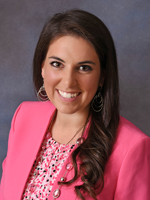
Sullivan
The Florida House and Senate may be aligned on a measure that would triple the size of the nation's largest education savings account program.
A bill filed today by Rep. Jennifer Sullivan, R-Mount Dora, would boost funding for Gardiner Scholarships* to $200 million, matching a proposal from a key committee chairman in the Senate.
The scholarships provide funding that parents of children with special needs can use for private school tuition, public school courses, homeschool curricula, tutoring, therapy and other education-related expenses.
Like the Senate plan, Sullivan's bill would make the scholarships available to more groups of students, including children with rare diseases, those who are vision or hearing impaired, and those with traumatic brain injuries.
HB 15 would clarify that it's illegal to use the scholarships to pay for services that are also billed to Medicaid or health insurance, which could help prevent fraud.
The bill would also make some changes to the state's tax credit scholarship program, which helps low-income and special needs students pay private school tuition.*
It would increase the amount of scholarship funding students can receive, offering larger increases for students in high school, where tuition tends to be more expensive. It would also strengthen the Department of Education's legal authority to kick schools out of the scholarship program if they repeatedly fail to submit clean financial audits.
*Step Up For Students, which publishes this blog and pays my salary, helps administer both scholarship programs.
A Florida Senate panel this morning approved a bill that, for the first time, would distribute local tax revenue evenly to charter and traditional public schools.
But it also stalled a measure that would increase districts' local taxing authority. And school districts argue that measure must be connected to the charter funding proposal.
The ensuing debate raised new questions over how Florida lawmakers plan to overhaul school facilities funding for both charter and traditional public schools.
Sen. David Simmons, R-Altamonte Springs, sponsor of both bills and chair of the education budget subcommittee, said school districts had reached a desperate point. Property values haven't fully covered from the Great Recession, and school districts have lost a quarter of their pre-recession taxing authority since 2008. But the state population is growing again, and so are districts' construction needs.
Simmons cited the testimony of district leaders, who visited his subcommittee a few weeks ago. They described grim rituals like "bucket day," when they rush to different campuses to catch rainwater leaking from their roofs.
"I believe very strongly ... that we are in a crisis situation regarding the capital expenditures in our districts," he said. (more…)
So much pre-confirmation talk about Betsy DeVos focused on her home state of Michigan.
As education secretary, she's pointing to a different state — arguably her second home — as a model for the nation.
"Florida is a good and growing example of what can happen when you have a robust array of choices," DeVos said Wednesday. She noted that 40 percent of the students in Florida go to schools that are different from the one they may be zoned for.
We break down that 40 percent number here.
As she settles into her new role, the new secretary wants to clarify her intentions.
I need to stress that I could not be more supportive of great teachers and great teaching, no matter what kind of delivery vehicle they are teaching through. We have to support great teachers. They just have to be freed-up to do what they do best. I think in many cases they are limited by the top-down, one size fits all approaches, either at the school level, the district level, the state level, or in all too many cases, the federal decree.
DeVos may have made a rhetorical misstep after her widely publicized visit to a D.C. public school. Her critics cast comments intended to suggest education bureaucracy saps teachers' initiative as an affront to teachers themselves.
She's preparing for school visits alongside Randi Weingarten of the American Federation of Teachers. Here's what she wishes she'd said in her confirmation hearing.
And still, the din of hyperbole grows louder.
With that in mind...
Washington State charters survive (another) constitutional challenge.
"Arizona is on its way to creating a completely universal educational choice program!"
Virginia lawmakers have plans revamp their state's charter school laws, which currently rank among the nation's worst.
Florida's education savings accounts could triple in size. Indiana lawmakers are considering a similar program, but the bill suffered a setback.
The time appears ripe for school choice expansion in Missouri.
Alabama's tax credit program could soon have a broader revenue base.
Education Week has a roundup of other states to watch. We've got your weekly rundown of legislative action in Florida.
Note: Every week the Florida Legislature is in session, we'll provide a rundown of school choice-related discussions and developments. Look for future installments on Saturday mornings.
Last week, the Florida Board of Education approved an unprecedented charter school takeover in a persistently struggling rural school district.
Jefferson County could soon be the first district in Florida where every public school is run by a charter organization.
As the House Education Committee learned, the move would also be a rarity in Florida school turnarounds.
Districts are required to make major changes in schools that receive F's or consecutive D's from the state. But of 115 schools currently required to make those changes, Jefferson's are the only turnaround schools districts plan to convert to charters.
During the committee's hearing, several lawmakers wondered aloud why charter conversions aren't more common. That's another reason Jefferson will be worth watching.
Expanding Private school choice (more…)
Representatives of four high-profile charter school networks told a Florida House committee they are eyeing the state for future expansions. They also discussed the barriers that might keep them away.
When it comes to attracting top charter school operators, the Sunshine State has a lot going for it.
It's the third-largest state. Its population is growing — so much so that some districts are rolling out the welcome mat to charters that might help exert growth. Its 20-year-old charter school law is ninth-best in the nation, according to the National Alliance for Public Charter Schools. It has more than 650 charter schools and thriving school choice culture. But since charters enroll one in ten of its 2.8 million public school students, it isn't totally saturated.
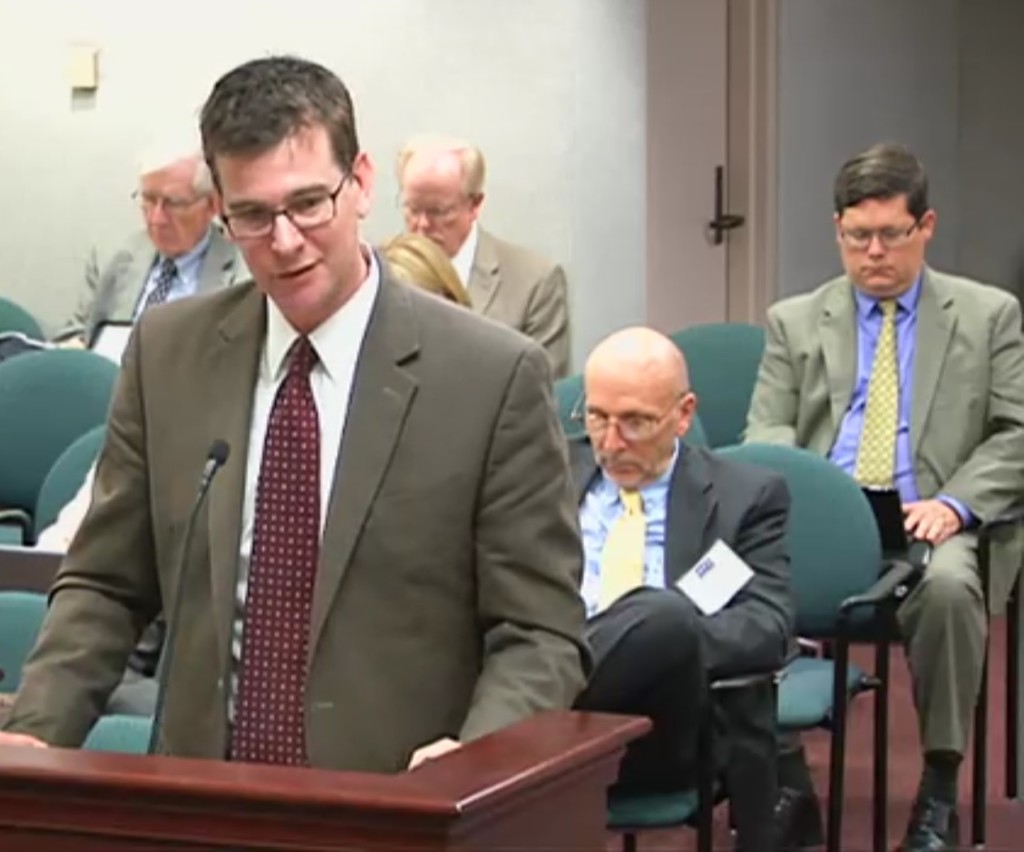
Peter Bezanson, of BASIS charter schools, testifies before the Florida House Choice and Innovation Subcommittee.
And yet, the state has struggled to attract the kind operators that appeared before the House Choice and Innovation Subcommittee this week — organizations that draw national headlines for targeting the most disadvantaged students and pushing them toward college.
Each of the charter groups cited potential obstacles that, in one form or another, are on lawmakers' radar during the upcoming legislative session: Teacher certification rules, school facilities, equitable funding.
BASIS runs academically "hyper-accelerated" charter schools in Arizona, Texas and Washington. Its schools push ninth-graders to take precalculus and require their students to take at least six Advanced Placement exams. It's created elementary schools and extended school days to make its demanding academics accessible to low-income students.
CEO Peter Bezanson said Florida is one of the top four states where BASIS eyeing future growth.
"We wanted to be a great choice, a high-quality choice for every kid who is willing to work hard," he said.
BASIS schools like to hire "subject-expert teachers," Bezanson said. If teachers are well-trained in a subject like physics and have an ability to connect with students, he said, certification exams and other regulations become needlessly onerous. (more…)
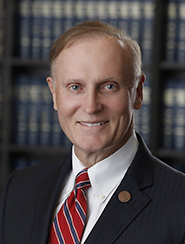
Simmons
The nation's largest education savings account program would triple in size under a bill filed yesterday by the Florida Senate's lead education budget writer.
SB 902 by Sen. David Simmons, R-Altamonte Springs, would boost funding for Gardiner Scholarships from $71.2 million to $200 million.
It would also expand the list of conditions that allow students to qualify for the scholarships, which are available to children with specific special needs. The bill would make scholarships available to hearing and visually impaired students, those with traumatic brain injuries and those who are hospital or homebound.
The scholarships are designed to be worth approximately 90 percent of the amount the state would spend to educate a child in public schools. Parents can use the money to pay for private school tuition, homeschool curriculum, therapies, public-school courses, college savings and other approved education-related expenses. (more…)
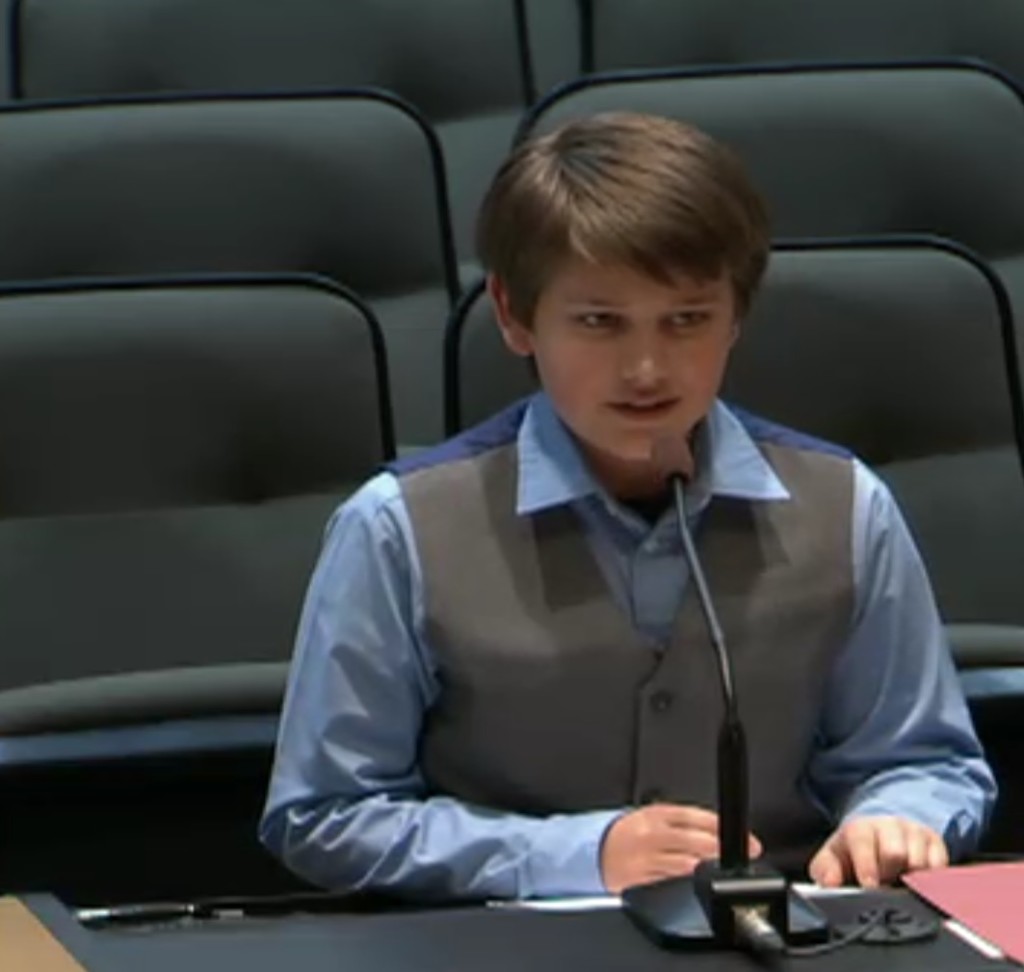
Ethan Greenberg testifies in favor of a computer science bill.
Florida lawmakers are once again pushing a proposal to expand computer science instruction and allow students to count high school credits in coding as foreign language classes.
A compromise bill that easily passed the Senate last year is back. It easily cleared its first legislative committee Monday. An identical version has been filed in the House.
The debate that still lingers around the proposal highlights the difficulty of giving students access to high-quality computer science courses.
Business and technology groups support SB 104 by Sen. Jeff Brandes, R-St. Petersburg. They're joined by students like Ethan Greenberg, a sixth-grader from Pembroke Pines. He told the Senate Education Committee he became interested in computer science as he struggled with dysgraphia, which made it difficult for him to recognize letters and numbers. He overcame that obstacle by typing on a computer, and has since started learning to code.
His mother, Ryan Greenberg, joined him testifying in favor of the bill.
"When kids have a choice, they come to the classroom excited to learn and more than likely, will get a good grade in the class they choose," she said. "This will be an important step forward in our state's need to integrate technology into our education curriculum." (more…)
Could this be the year Florida finally finds a way to fund charter school facilities?
A pair of bills, filed by Sen. David Simmons, the Central Florida Republican in charge of the upper chamber's education budget, suggests it might be.
Simmons
One of the bills, first reported by the Gradebook, would increase school districts' optional property taxing authority. The other would guarantee, for the first time, that charter schools would get a fair share of that revenue, based on the number of students enrolled.
Right now, charters rely on uncertain annual appropriations. Funding can fluctuate year to year, but it's recently been stuck at $75 million, far below the amount received by traditional public schools. Under Simmons' proposal, charters could still receive annual appropriations, too.
Taking a closer look, Simmons' proposal offers something for everyone who typically jumps into the annual slugfest over charter school facilities funding.
It has a clear benefit for charters. During the 2015-16 school year, the most recent for which budget data are available, Florida school districts raised $2.3 billion in property tax revenue. Charter schools typically don't share that money right now. A fair pro-rata share for charters, which enroll about one in ten public school students, could yield a revenue stream worth more than three times what they currently receive through annual appropriations. (more…)
For its first hearing of the year, the Florida House's Education Committee heard from leaders of several out-of-state charter school networks. The theme, according to Mike Bileca, R-Miami and chair of the committee, was "schools that have taken excellence and scaled."
Florida education officials have pushed for years to bring more nationally well-regarded charter schools to the state. Bileca has long supported those efforts.
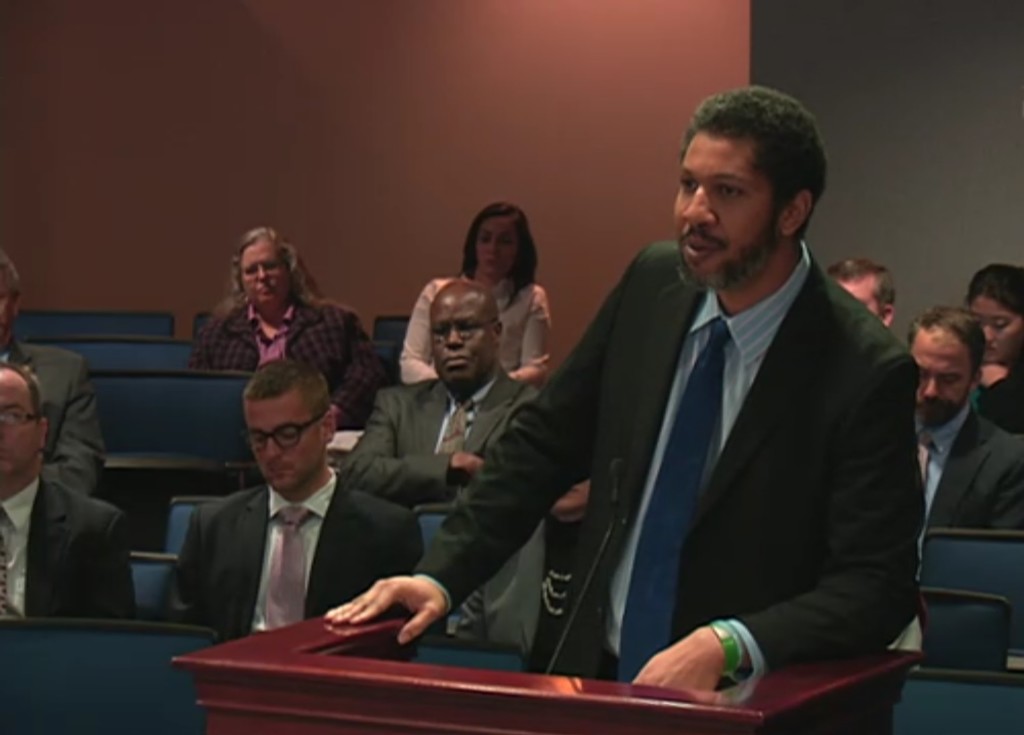
KIPP Foundation executive Quentin Vance addresses the Florida House Education Committee.
Quentin Vance, an executive at the KIPP Foundation, pushed back against the idea that there's "a trade-off between charter schools and public schools, and this is a competition." His organization, one of the largest charter operators in the country, has started a network of schools in Jacksonville, and is now in the early stages of a formal collaboration with the Duval County school district there.
An excerpt from his comments is below, lightly edited for length and clarity.
Nationally, what we've seen in growing schools in so many different cities across the country is that when there is increased choice for kids, where families can become consumers and the only metric of deciding where they want to go to school is what's going to be best for their kids it creates an environment in which everyone gets better.
(more…)

